Claims that look as good as *your product*
Every skincare brand promises younger, brighter, smoother skin. We help you prove it — with clinical evidence designed for your PDPs, your Sephora pitch, and the TikTok comment section asking "but does it actually work?"
How does Citruslabs run studies for Skincare & Cosmetics? Citruslabs designs and runs IRB-approved clinical studies tailored to Skincare & Cosmetics brands — consumer perception studies (4–8 weeks, $15K+), single-arm clinical studies (8–12 weeks, $40K+), or randomized controlled trials (12–16 weeks, $80K+). Each study uses category-appropriate endpoints and biomarkers, ships with a marketing claims appendix reviewed for FTC and FDA best practices, and earns the optional Citruslabs Tested Seal if the data supports product claims.
Dermatological testing, consumer perception, and clinical trials for skincare and beauty products.
Everyone says "clinically proven." *Almost nobody is.*
Walk down any beauty aisle and you'll see "clinically tested," "dermatologist-approved," and "92% saw results" on every other box. Most of it is borrowed ingredient data, a single dermatologist's sign-off, or survey results from a brand's own customer base. **That's not clinical evidence — it's marketing theater.** Real clinical testing means an IRB-approved study, an independent participant pool, standardized photography, and statistically analyzed results. The kind of evidence that holds up when a Sephora buyer asks "show me the study" or when the FTC sends a challenge letter. We build that evidence. For your product. With your claims goals in mind from day one.
Contains retinol, which has been clinically shown to reduce wrinkles
In a 12-week clinical study, 94% of participants showed visible reduction in fine lines, confirmed by expert grading
Categories
Anti-Aging & Wrinkles
Fine lines, firmness, elasticity, crow's feet. We pair expert dermatologist grading with standardized photography and consumer perception for claims that satisfy both Sephora buyers and FTC scrutiny.
Hydration & Moisture
Hydration levels, moisture barrier, plumpness, dryness reduction. We measure with Corneometer readings, TEWL analysis, and validated self-assessment questionnaires for multi-dimensional proof.
Brightening & Tone
Radiance, dark spots, uneven skin tone, glow. Standardized photography under controlled lighting captures visible changes, paired with expert grading for measurable brightening claims.
Hair & Scalp
Growth, thickness, shedding reduction, scalp health. Trichologist-graded assessments and participant photography document visible changes over your study period.
Sensitive Skin & Redness
Redness reduction, calming, sensitivity, irritation-free claims. We design protocols for reactive skin types with dermatologist oversight and validated sensitivity scales.
Body & Personal Care
Body care, lip treatments, deodorant efficacy, oral care. Consumer perception studies and clinical measurements tailored to your specific product format and claims goals.
We measure what you *can see — and can't*
Questionnaires capture how people feel. Expert grading and skin markers capture what's actually changing. We layer both for claims that are as deep as they are persuasive.
- Before & After Photos
- Expert Skin Grading
- Expert Hair Grading
- Skin Microbiome
- Validated Questionnaires
- Scalp Microbiome
No ring light required
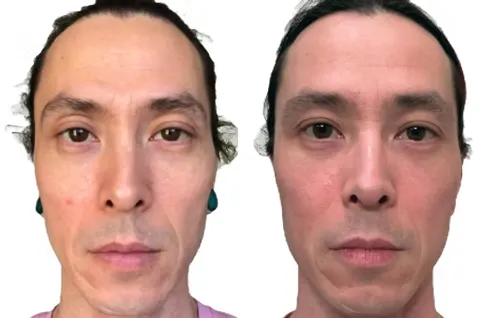
Before & after photos, done right
Consumer photos are the most persuasive asset in skincare marketing, and the easiest to get wrong. Inconsistent lighting, different angles, or a flattering filter can undermine the credibility of an otherwise strong study. We standardize every capture so your before-and-afters hold up to scrutiny from customers, retailers, and regulators alike.
Study Types
Consumer Perception Study
Consumer-reported outcomes via validated questionnaires. The fastest path to claims like '9 out of 10 women agreed' — ideal for DTC brands, social proof, and PDP copy.
Clinical Trial
IRB-approved protocol with expert grading, standardized photography, and statistical analysis. The gold standard for retail buyers, medical claims, and regulatory defensibility.
Frequently Asked Questions
- How many participants do I need for a skincare study?
- Most skincare perception studies need 30–40 participants for statistically meaningful results. Clinical trials with expert grading or instrumental measurements typically require 40–100+ participants depending on the claims you need and the effect size expected.
- What's the difference between a perception study and a clinical trial?
- A perception study captures consumer-reported outcomes — how people feel about their skin after using your product. A clinical trial adds objective measurements like expert dermatologist grading, standardized photography, and instrumental analysis (e.g., Corneometer for hydration) for quantitative, defensible claims.
- Can I test multiple products in one study?
- Yes. We can design multi-arm studies that test multiple products, shades, or formulations simultaneously. This is common for brands launching a line or comparing a new formula against an existing one.
- Do you handle recruitment?
- Yes. We recruit from our database of 250K+ vetted participants, matching demographics, skin type, skin concerns, and other criteria to your target consumer. Most studies reach full enrollment within 1–2 weeks.
- How fast can I get results?
- Perception studies can deliver results in as little as 4–6 weeks. Clinical trials with expert grading typically take 8–12 weeks. We provide interim check-ins and a final marketing-ready report with claims, photography, and statistical analysis.
- What claims can I make from a perception study vs. clinical trial?
- Perception studies support claims like '9 out of 10 women agreed their skin felt smoother.' Clinical trials support stronger claims like 'clinically shown to reduce fine lines by 31%' with expert grading and statistical significance. We help you choose the right study type based on where you plan to use the claims.
Testimonials
We tried three different testing companies before Citruslabs. The difference? They actually understand what claims we needed for Sephora and built the study around that. Our anti-aging serum now has real clinical backing.
Sarah M., VP Marketing at DTC Skincare Brand
The before & after photos alone were worth the investment. Professional-grade imagery with clinical backing — our conversion rate on PDPs went up 34% after we added them.
Jennifer L., Product Director at Clean Beauty Co.
We went from 'contains ingredients clinically shown to...' to 'in a clinical study, our product was shown to...' — that shift in language changed everything for our retail partnerships.
Rachel K., Founder at Indie Skincare